
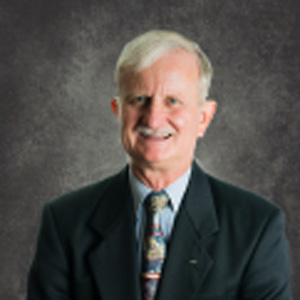
Captain Jim Philpitt retired from the United States Navy in October 2007 following over 30 years of military service, to include the Cold War and Operations SOUTHERN WATCH, ENDURING FREEDOM and IRAQI FREEDOM. Originally intending to be an Air Force officer, Captain Philpitt completed the Air Force ROTC program at Florida State University in June 1977, compressing a 4-year commissioning program and BS degree into 2 years, 9 months. When a post-Vietnam Reduction in Force eliminated his orders to USAF flight training prior to graduation, he obtained a conditional release from the Air Force and reported in June 1977 to Aviation Officer Candidate School at NAS Pensacola, Florida. Commissioned as an Ensign in the Naval Reserve in September 1977, he reported to flight training in January 1978 and augmented to the Regular Navy in 1981. He also holds an MPA degree from the University of West Florida and is a graduate of the U.S. Naval War College, the Air War College and the Joint Forces Staff College.
A career Naval Flight Officer, he has logged over 3,600 flight hours in various carrier-based and shore-based strike and reconnaissance aircraft with multiple deployments to the Atlantic, Pacific, Mediterranean, and Persian/Arabian Gulf theaters of operation. His operational assignments include multiple aviation squadrons, air wings, and a ship’s company tour in air operations aboard an aircraft carrier. He has also held staff positions at the joint task force, numbered Fleet, naval component, and combatant command level afloat and ashore, to include Chief of Current Operations and Director of the Joint Operations Center at Headquarters, U.S. Central Command at MacDill AFB, Florida in the days and months following the Al-Qaeda attacks of September 11, 2001. Following assignment to the staff of the Commander, U.S. Naval Forces Central Command/U.S. 5th Fleet in Manama, Bahrain, he held aviation major command as Commodore of Tactical Air Control Group ONE in San Diego, California, leading eight active and reserve tactical air control squadrons deploying afloat and ashore worldwide. His personal decorations include multiple awards of the Legion of Merit, Defense Meritorious Service Medal, Meritorious Service Medal, and numerous others.
Following his retirement from the Navy, he spent over 16 ½ years in various civilian staff roles in training, readiness, experimentation, and project management with a U.S. Air Force Field Operating Agency, a Naval Air Warfare Center, U.S. Central Command, and U.S. Special Operations Command before joining the Florida Space Institute’s Defense Science & Technology Office (DSTO) in 2025 as DSTO’s principal for engaging activities and organizations of the U.S. Department of Defense, U.S. Coast Guard, the Intelligence Community, and defense organizations of allied partner nations in aerospace endeavors. Nationally certified as an Accredited Airport Executive (A.A.E.) and an Executive Emeritus member of the American Association of Airport Executives, he has also served as an adjunct faculty member for both Embry-Riddle Aeronautical University and the University of Tampa, teaching various undergraduate and postgraduate courses in aeronautical science, aerospace safety, aviation management, public administration, national defense policy, and international affairs. In addition to his numerous professional memberships, he currently serves as a principal for the Florida Advanced Training Range (FATR) and Eastern Regional Range Complex (ER2C) initiatives, is a key advisor to the Florida Defense Alliance, provides subject matter expertise to the Florida Defense Support Commission, and routinely engages the senior leadership of the National Defense Industrial Association (NDIA) in Washington, DC.